
The Journey of a Military Working Dog: From Selection to Specialized Training
They detect explosives before soldiers ever see danger. They track suspects through terrain no human could follow. They put themselves between their handler and harm without a second thought.
Military working dogs are among the most highly trained animals in the world, but their journey to the front lines is one most people never see.
At Paws of Honor, we support these dogs after their service ends. But to truly understand why their retirement care matters, it helps to understand what military working dog training actually looks like from the start.
Where Military Working Dogs Come From
Purpose-Bred for Service
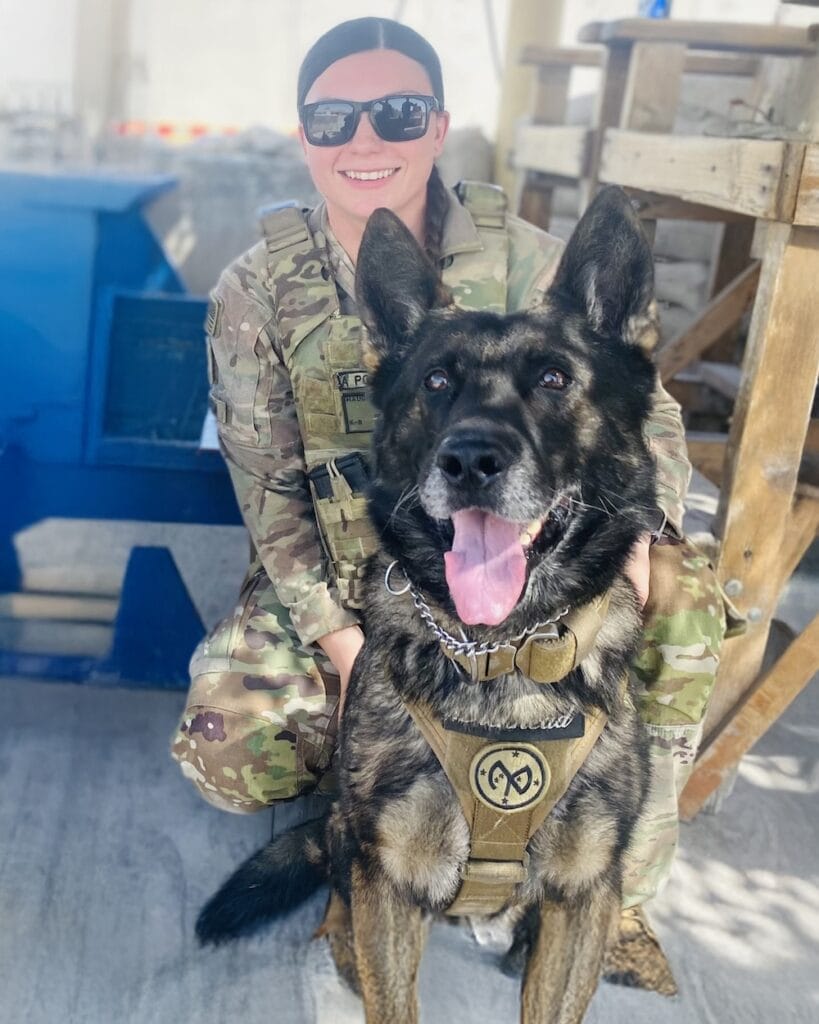
Military and police K9s aren’t random picks. Most working dogs are purpose-bred from specialized working lines, often from long-established programs in the U.S. and Europe where traits like drive, confidence, trainability, and strong nerves have been refined over generations. These breeders aren’t producing pets. They’re producing elite canine athletes built for demanding work.
It’s uncommon for frontline military or patrol K9s to come from shelters. The job requires a very specific temperament and working drive that are rare in the general population.
Military and Law Enforcement Sourcing
The U.S. Department of Defense primarily acquires dogs from elite breeders in Europe, where working lines have been developed for decades. About 10-15% of military working dogs are born through the military’s own breeding program at Joint Base San Antonio-Lackland. On the law enforcement side, most police agencies purchase dogs from professional working dog vendors and specialized K9 breeders. Many of these dogs arrive “green,” meaning they have foundation skills but complete their training alongside their assigned handler.
How Working Dogs Are Selected
Drive, Nerve Strength, and Focus
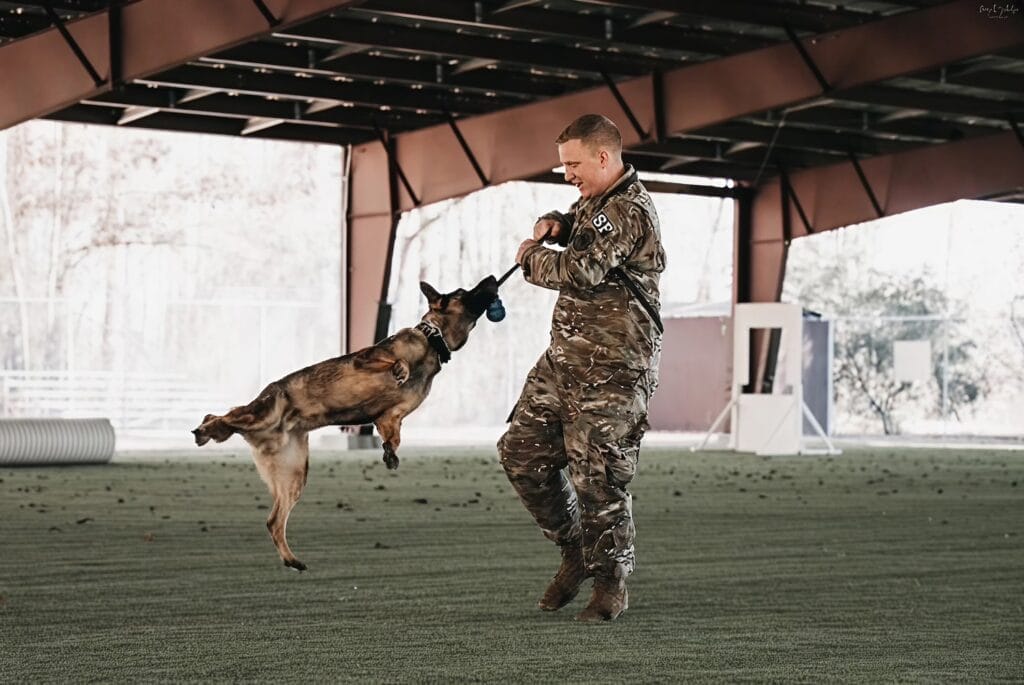
Not every dog can do this work. Above all, a working dog must want to work. Selection tests measure prey drive, hunt drive, toy and reward motivation, and persistence under stress. If the drive isn’t there, it can’t be trained in.
Nerve strength is equally critical. Can the dog walk across slick floors without hesitation? Stay steady during loud noises? Remain confident in chaotic environments? These aren’t small asks, they’re the baseline. Working dogs must also lock onto a task, ignore distractions, and respond clearly to handler cues. Partnership between dog and handler is everything, and it starts here.
Physical Soundness
These dogs are elite athletes, screened for hip and elbow health, cardiac strength, and overall structural soundness. Selection is structured and data-driven, temperament testing can begin as early as a few weeks old in breeding programs, and only a small percentage of candidates make it through.
Early Stages of Training
The Importance of Military Working Dog Training
Before a working dog ever learns detection or patrol skills, training focuses on building confidence. Young dogs are intentionally introduced to loud noises, vehicles, different surfaces, crowds, and spaces. Every experience is designed to build a dog that stays calm and focused in environments that would overwhelm most animals.
Reward Systems and Basic Control
Training builds on one powerful principle: work equals reward. Many detection dogs work for a toy, and the search becomes a game they never want to quit. Alongside that drive, dogs learn the foundations of obedience, recall, heel, impulse control, and clear handler communication. Precision here is what makes advanced training possible later.
Training for Specialized Roles
Patrol and Bite Work
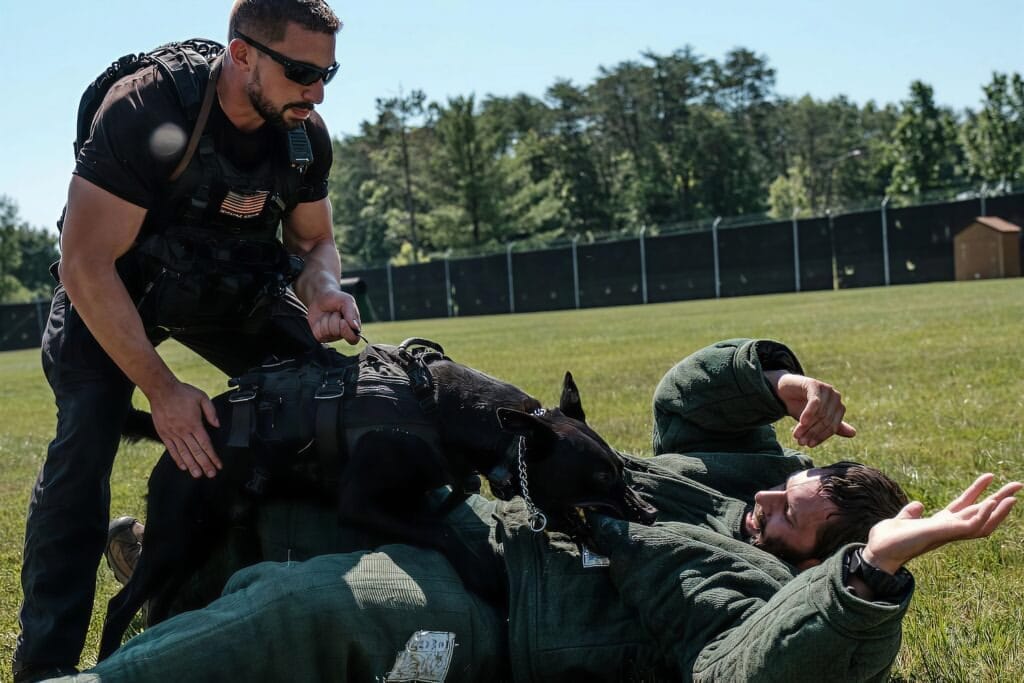
A patrol dog isn’t trained to be aggressive. They’re trained to be precise, disciplined, and completely under control. Training starts with obedience drills before dogs ever practice bite work with a trained decoy. Just as important as the bite itself is the “out” command, releasing immediately and staying handler-focused. The bite is a tool. Control is everything.
Explosive and Narcotics Detection
For detection dogs, searching is the best game in the world. Training follows a simple rule: find the odor, earn the reward. Dogs learn to recognize specific narcotic and explosive odors, and when they find the target, they signal clearly, often by sitting, freezing, or staring at the source. With noses estimated to be 100,000 to 1 million times more sensitive than ours, these dogs are built for this work.
Tracking
Tracking dogs follow trails humans can’t even see. When a person walks, they leave behind skin cells, disturbed vegetation, and ground scent. Early training tracks are short and fresh, teaching the dog to keep its nose down and follow the scent line. As training progresses, tracks become older, longer, and more complex across different terrain. Tracking is a true partnership, handlers read the dog’s body language to understand where the trail leads.
Graduating into Service
Transition From Training to Active Duty
Not every dog that enters a training program graduates, and that’s okay. Some are redirected to other roles, enter adoption programs, or retire early. Welfare is always the priority. For those who do graduate, the transition from training to active duty is the beginning of a career defined by discipline, courage, and an unbreakable bond with their handler.
Honoring Their Service From Day One
How Paws of Honor Supports Retired K9s
After years of protecting and serving, these dogs retire. And when they do, they deserve the same level of care and dedication they gave throughout their careers. At Paws of Honor, we provide veterinary care and support at no cost to the handlers and families of retired military and law enforcement K9s. From routine wellness to specialized treatment, we ensure these heroes are never without the medical care they need.
Because their service may end, but their well-being shouldn’t. If you’d like to support the dogs who spent their careers standing on the front lines for us, please consider donating to Paws of Honor.